Early into the first season of At Home With Arlene Williams, Arlene realized that viewers had a lot of questions about the instructions with her recipes. What’s the difference between stir and blend? Or sauté and simmer? How do you fold something? Just how much is a pinch of salt? And what does it mean to scald milk?
In this episode from 1991, Arlene demonstrates 12 common cooking terms, so that the next time you read a recipe, you’ll be prepared.
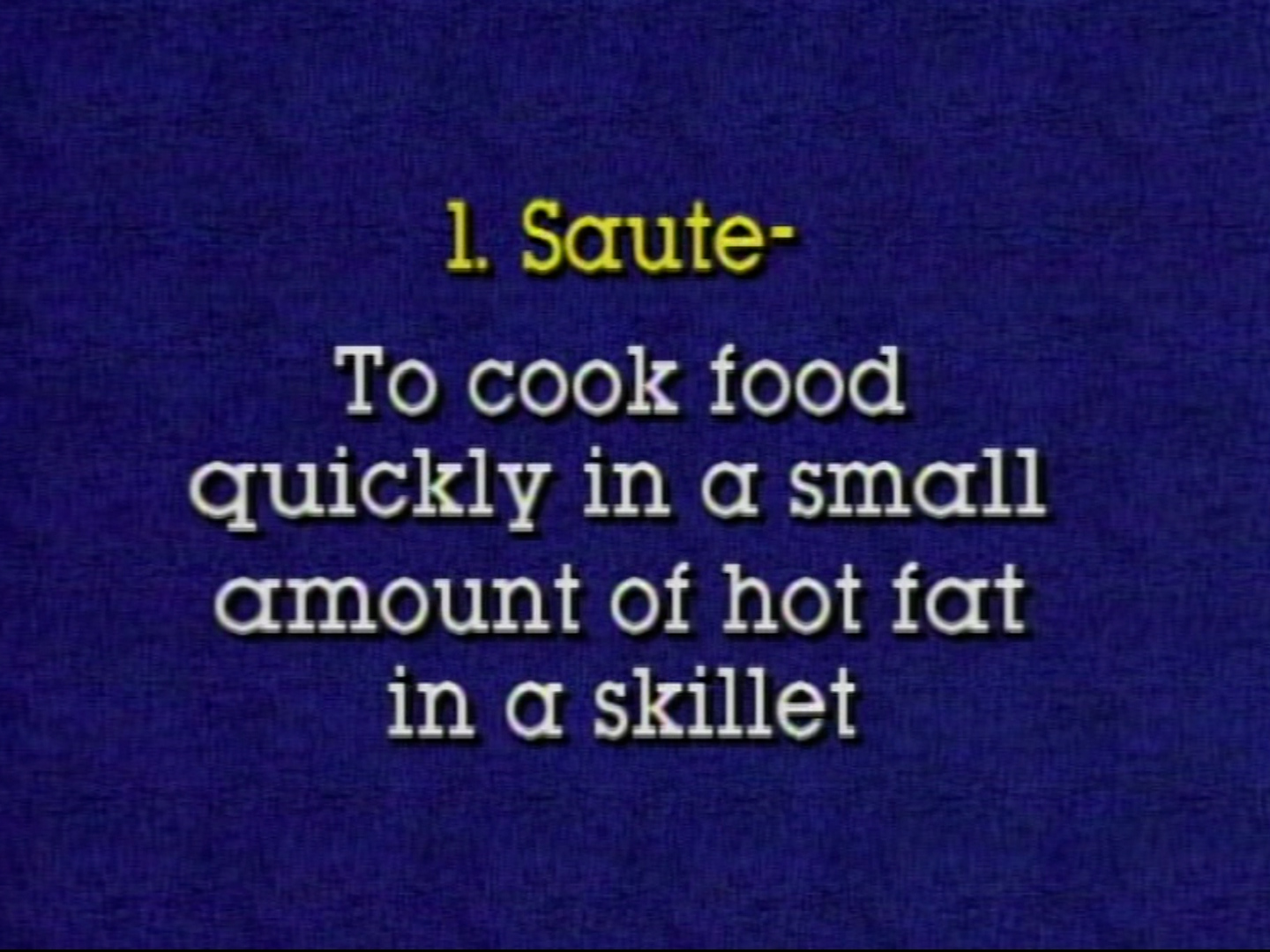
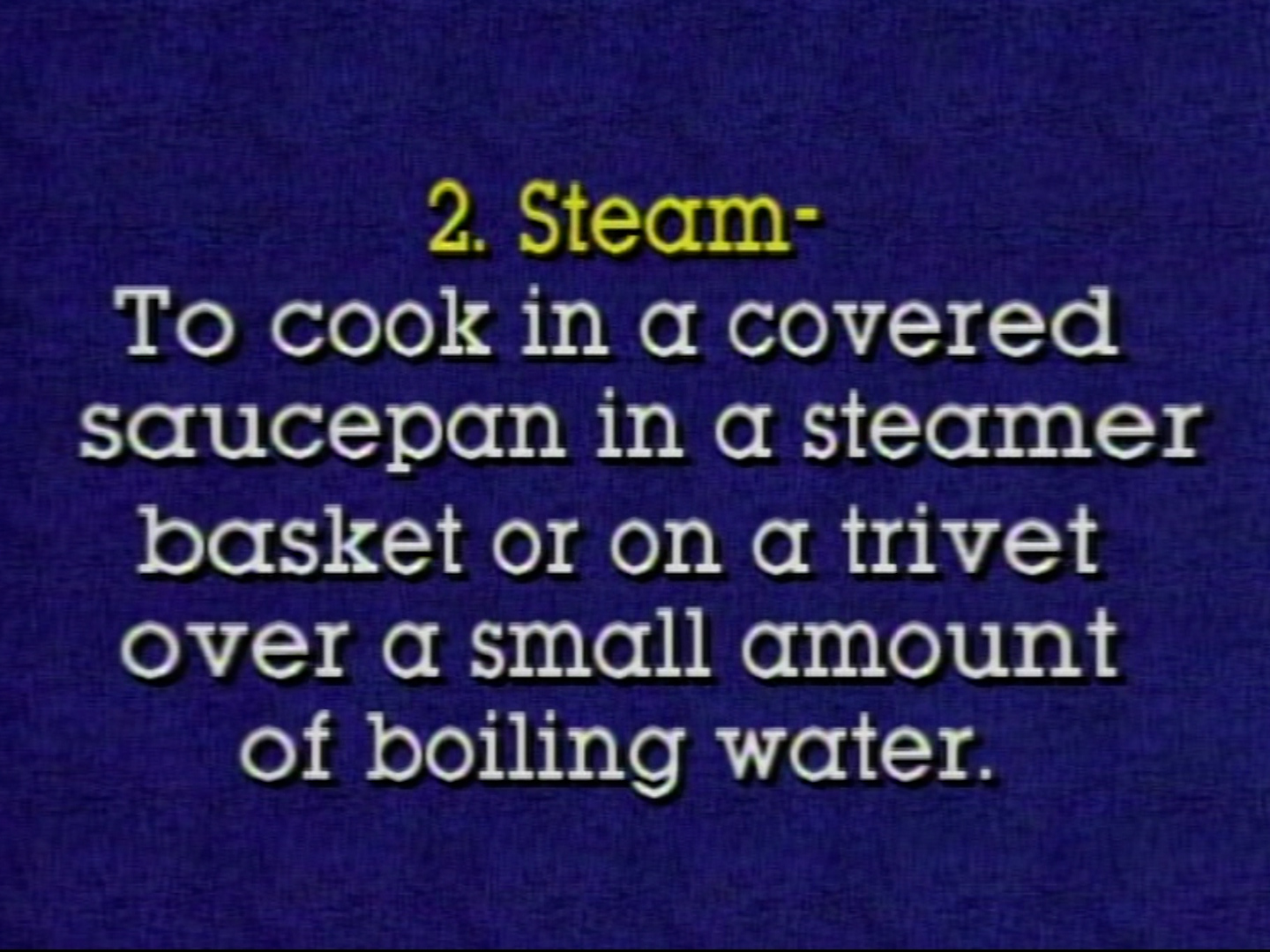
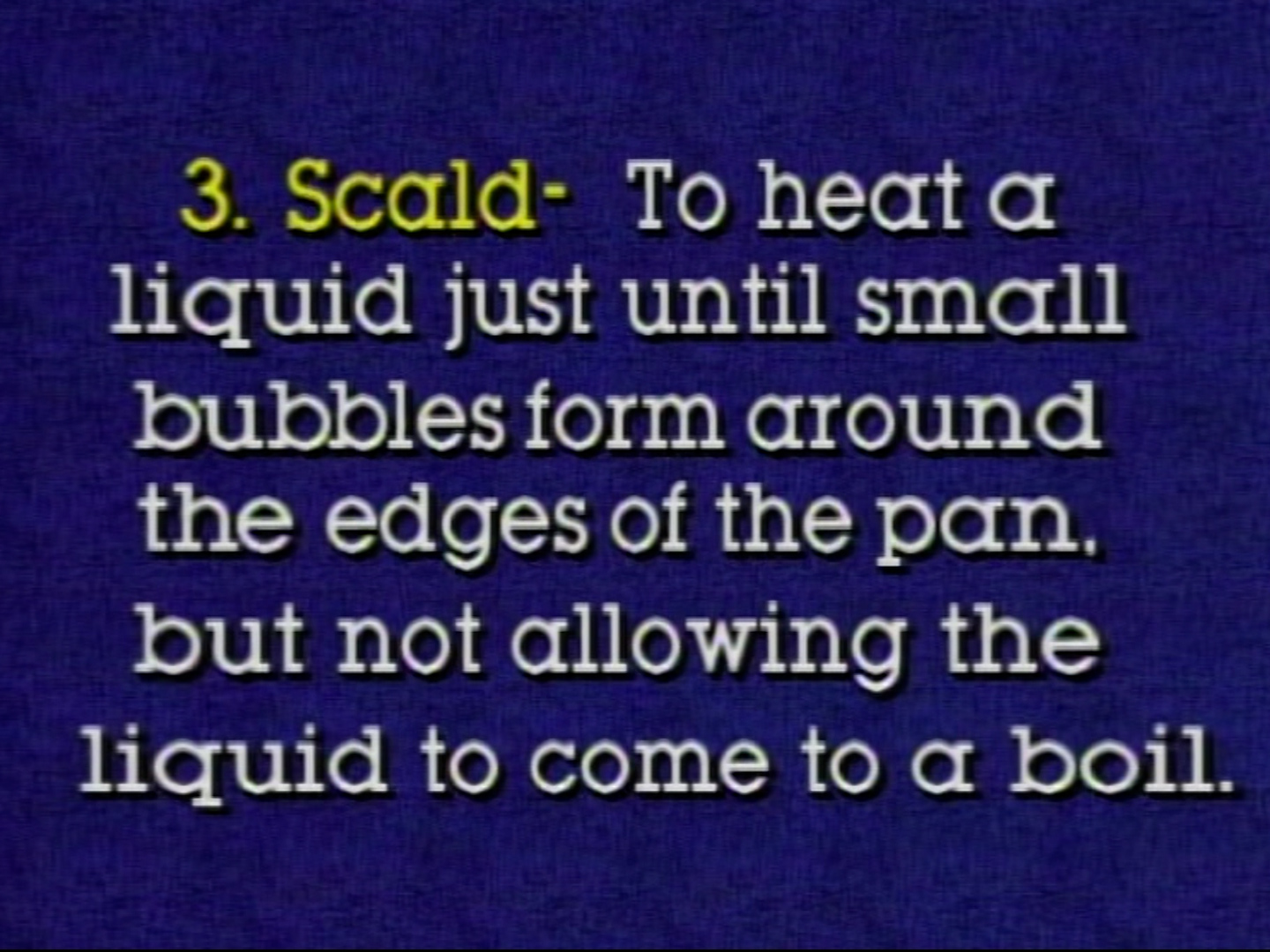
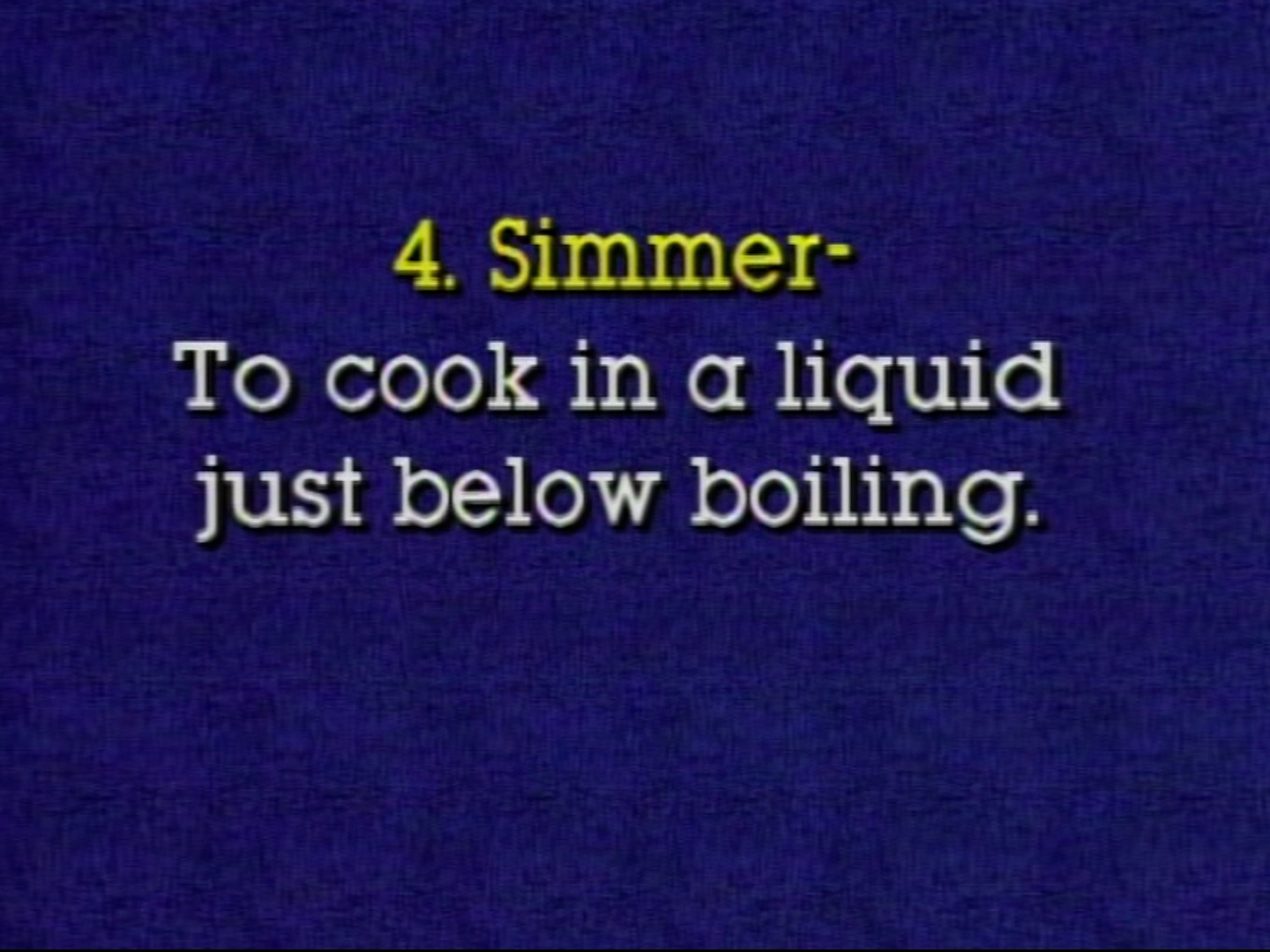
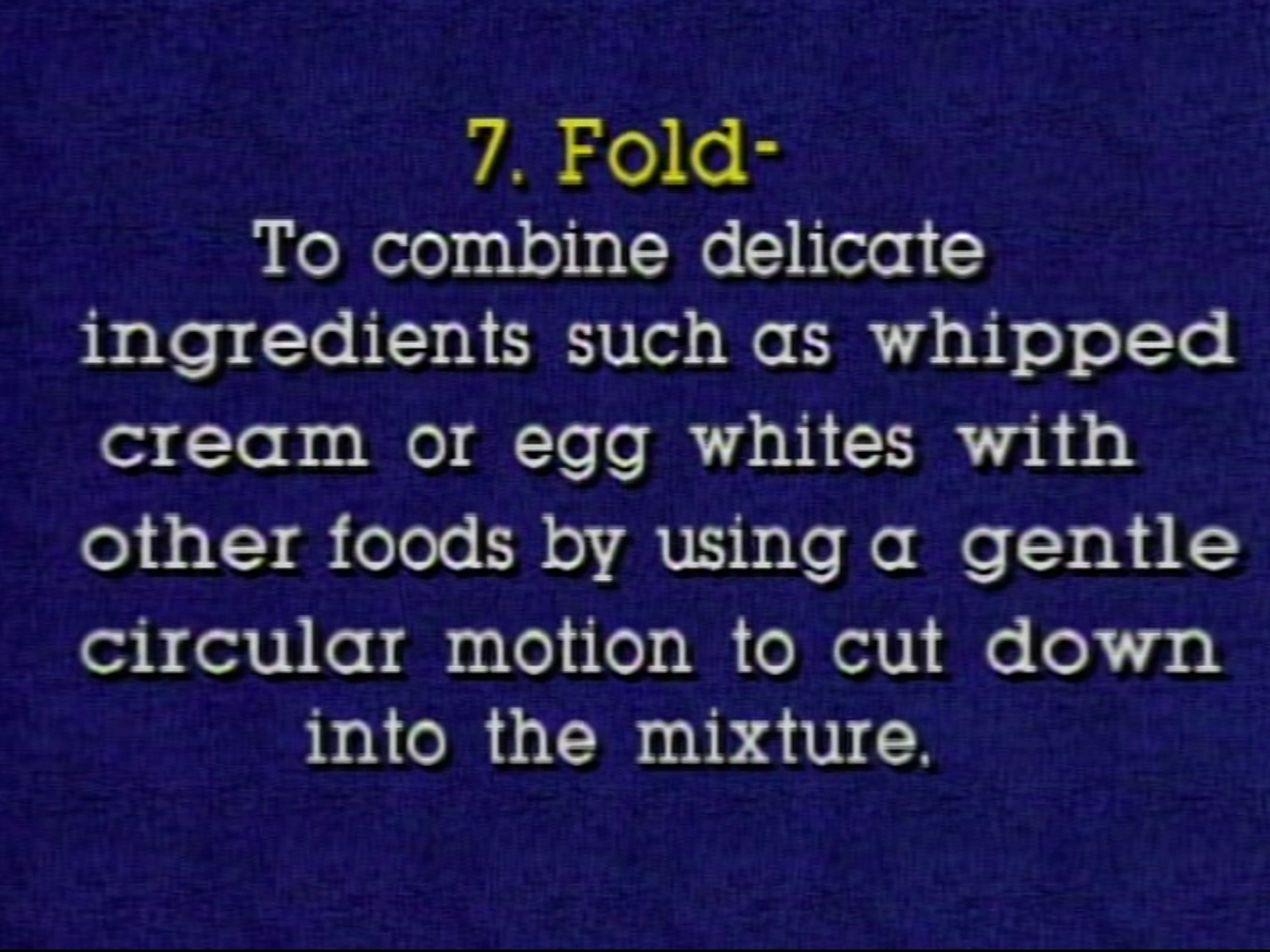
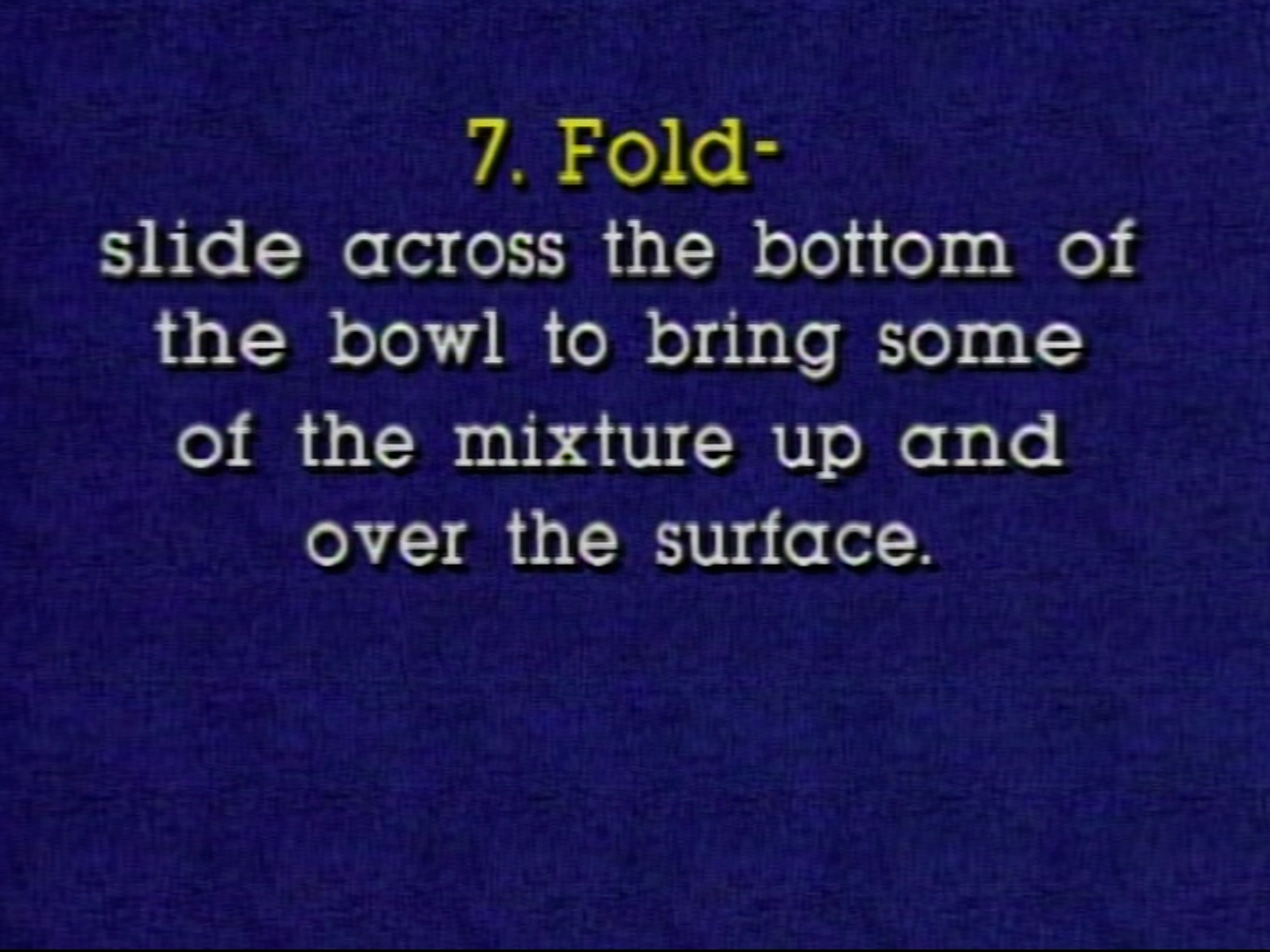
This show doesn’t have any official recipes, so we’ve taken screenshots from the episode and put them below with each term Arlene covered. The full list is: Sauté, Steam, Scald, Simmer, Marinate, Cream, Blend, Pinch, Stir, Fold, Cut In, and Knead.
Transcript
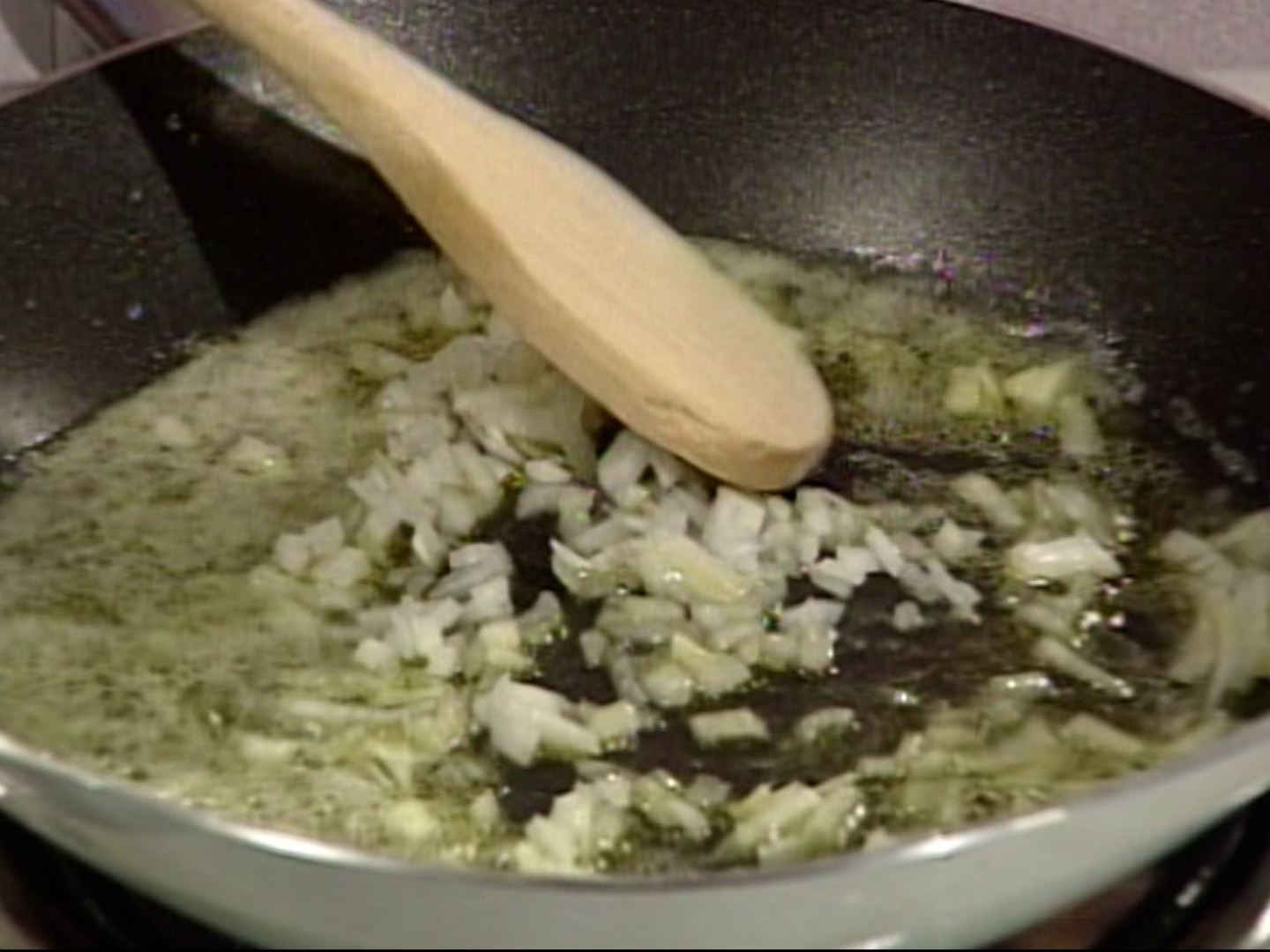
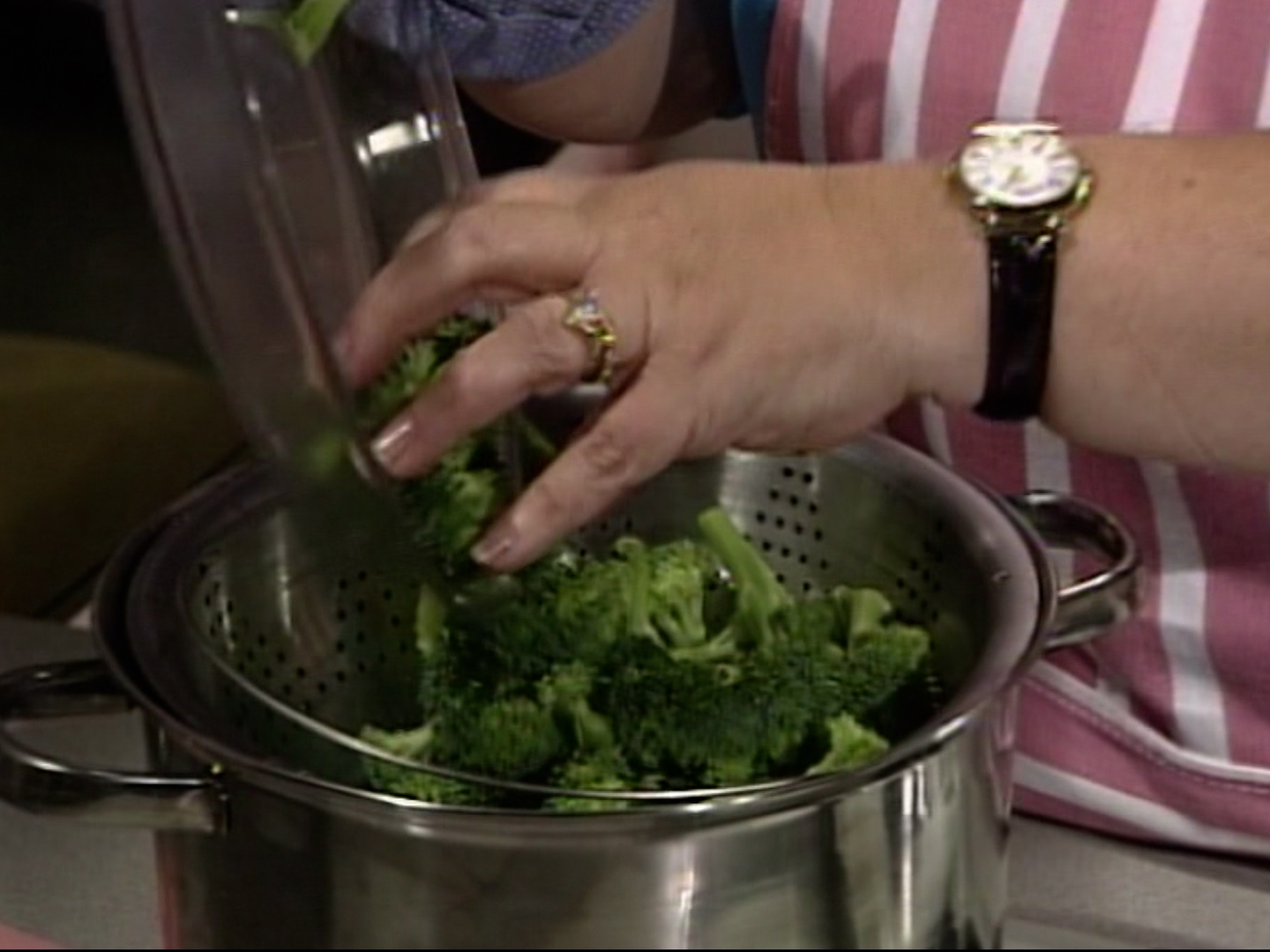
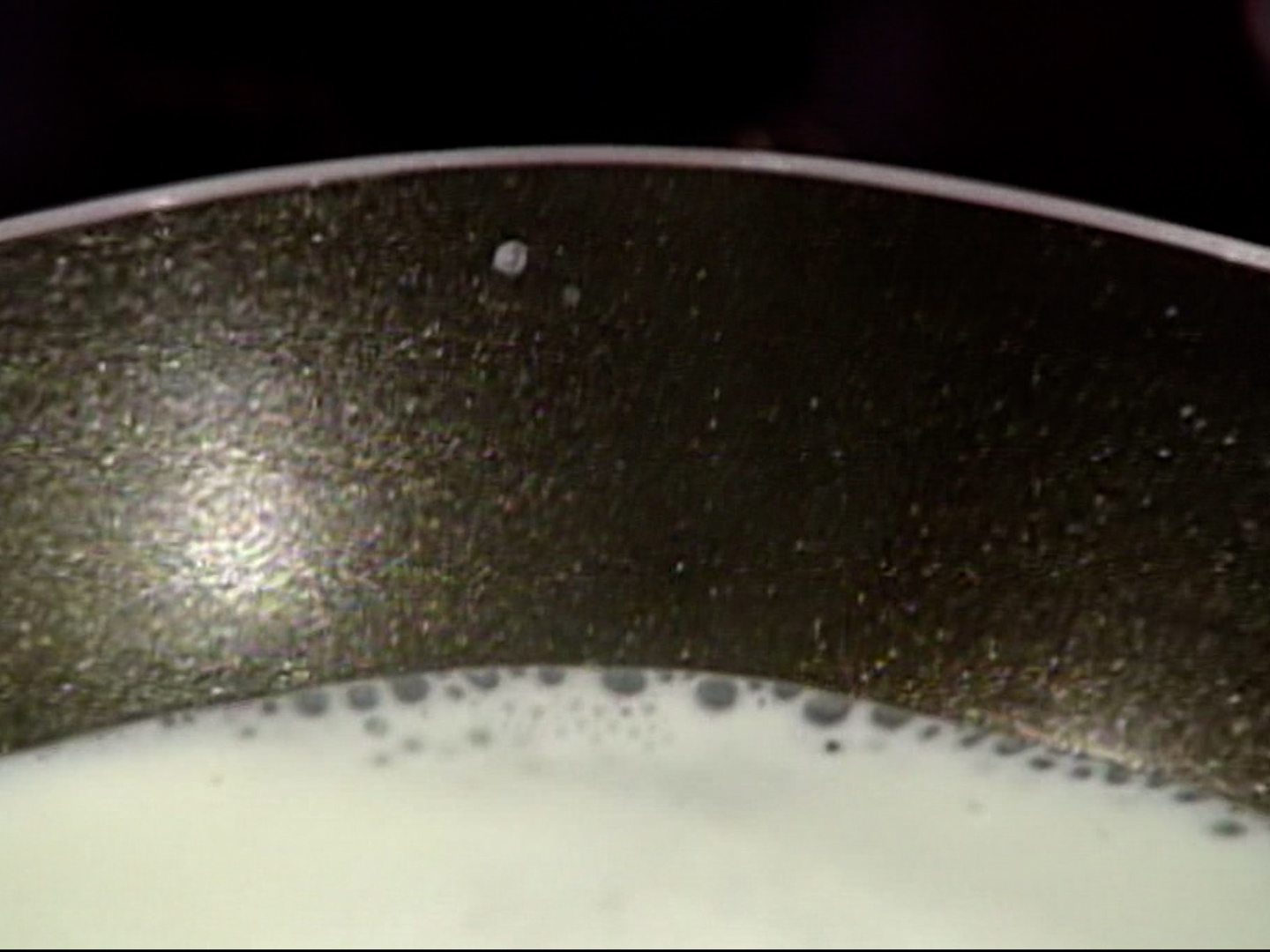
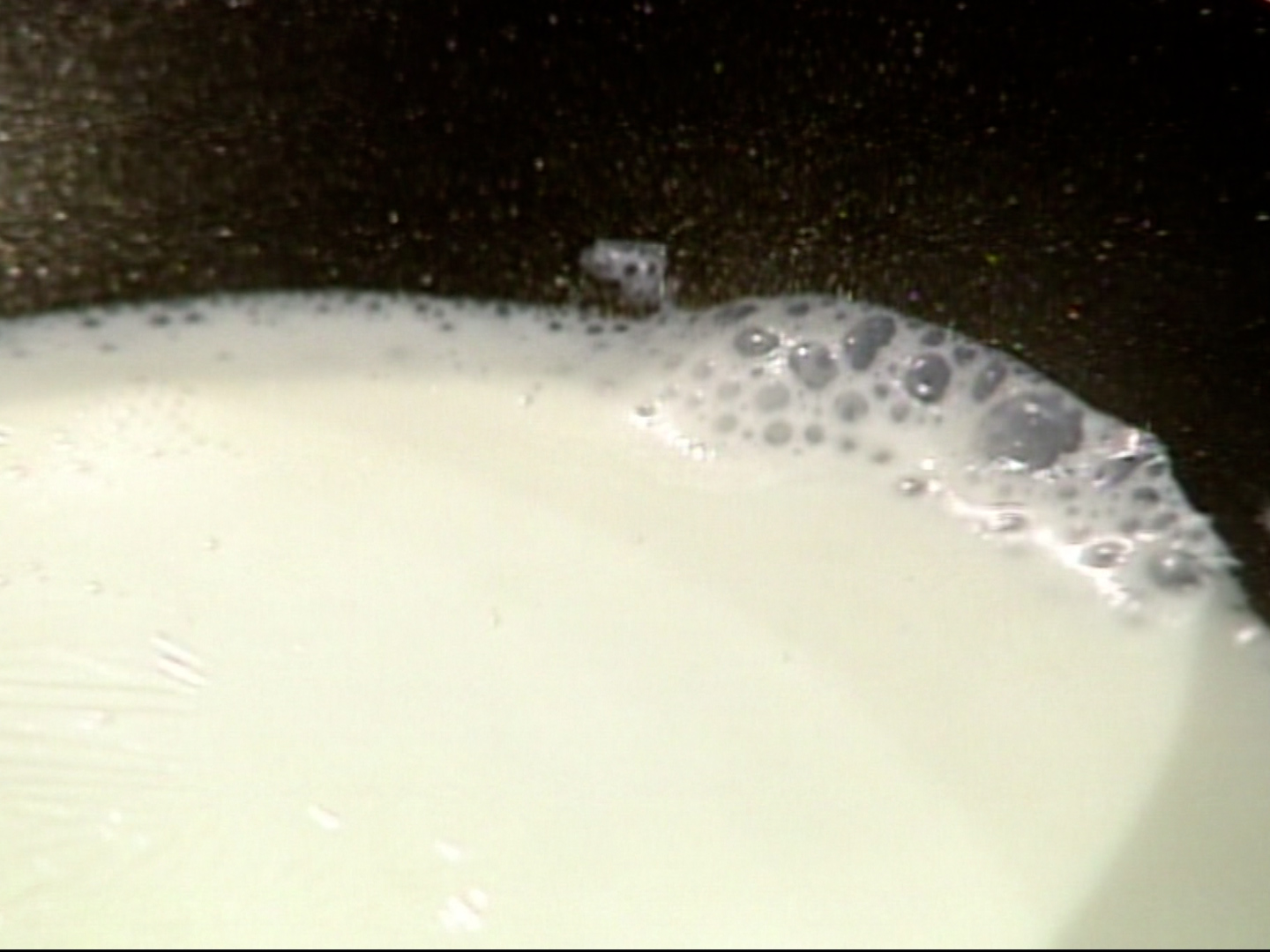
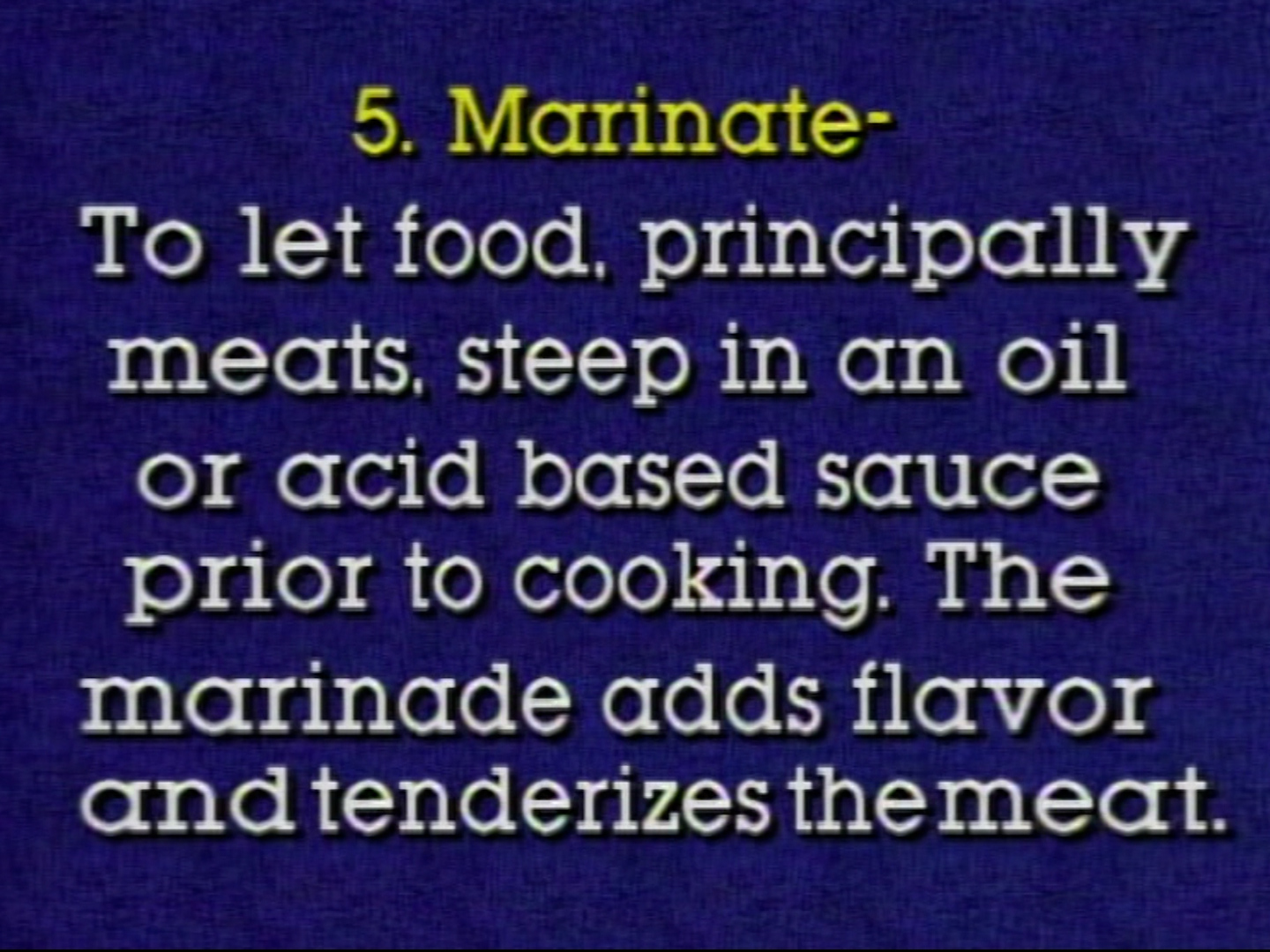
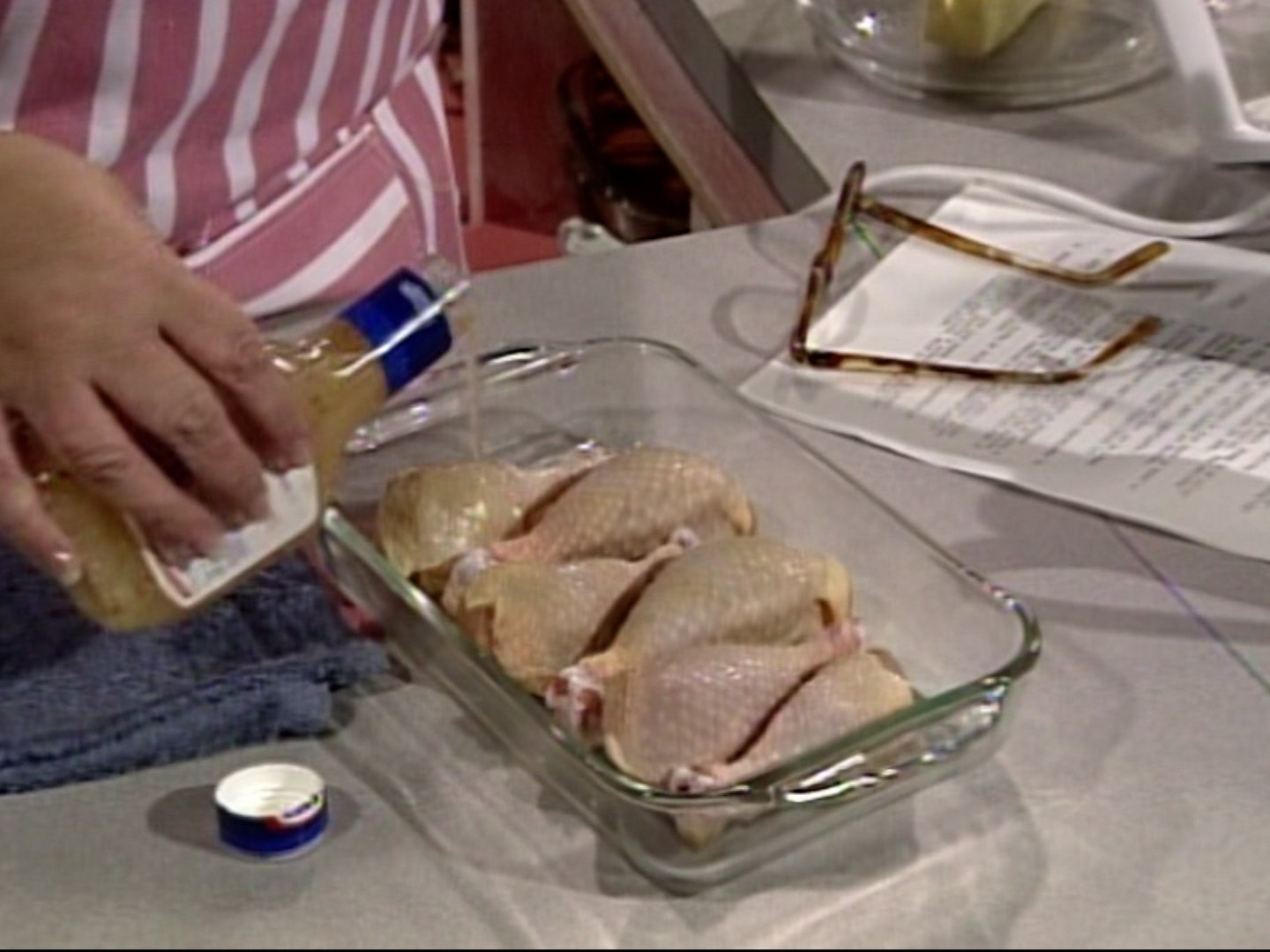
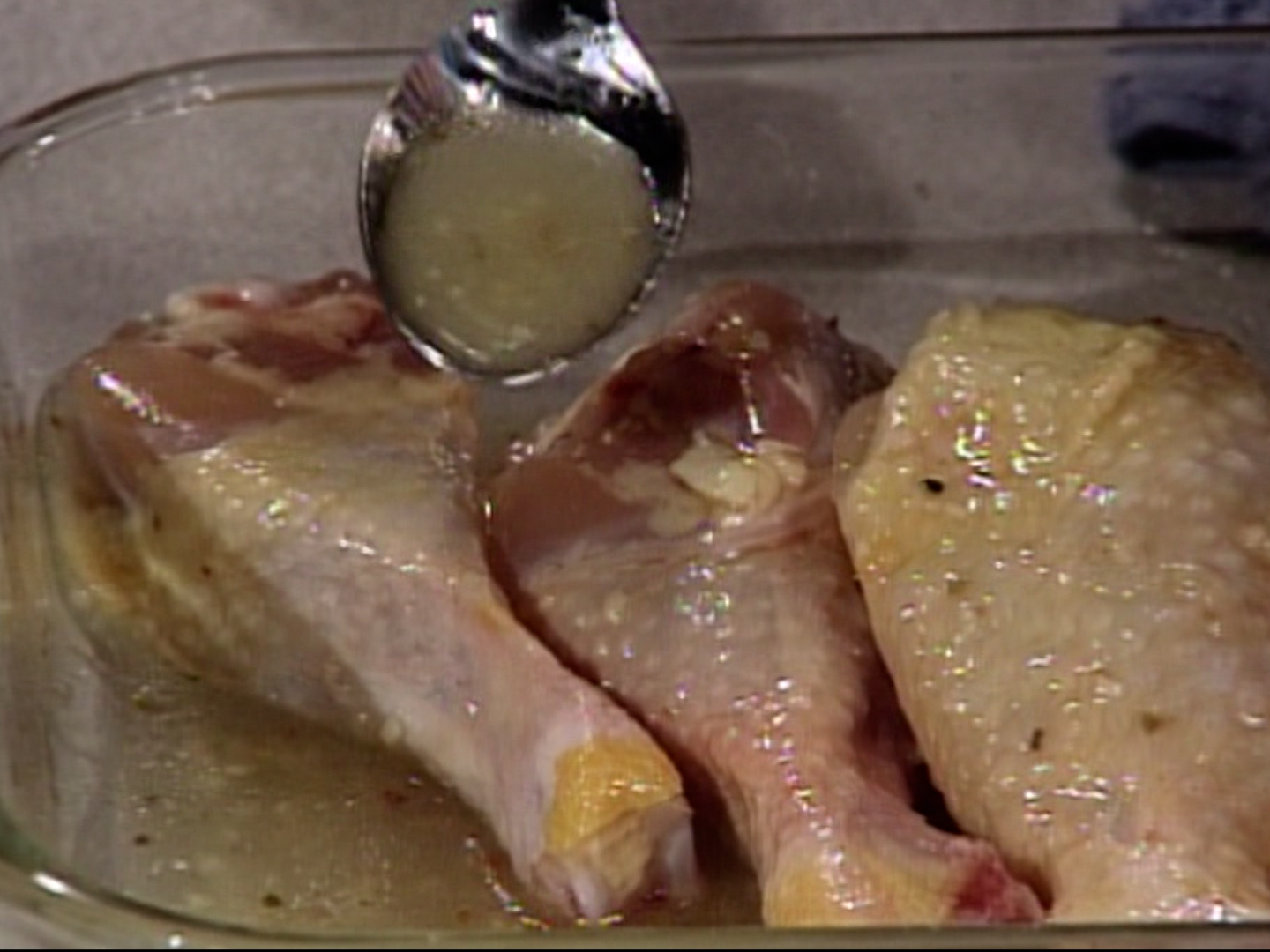
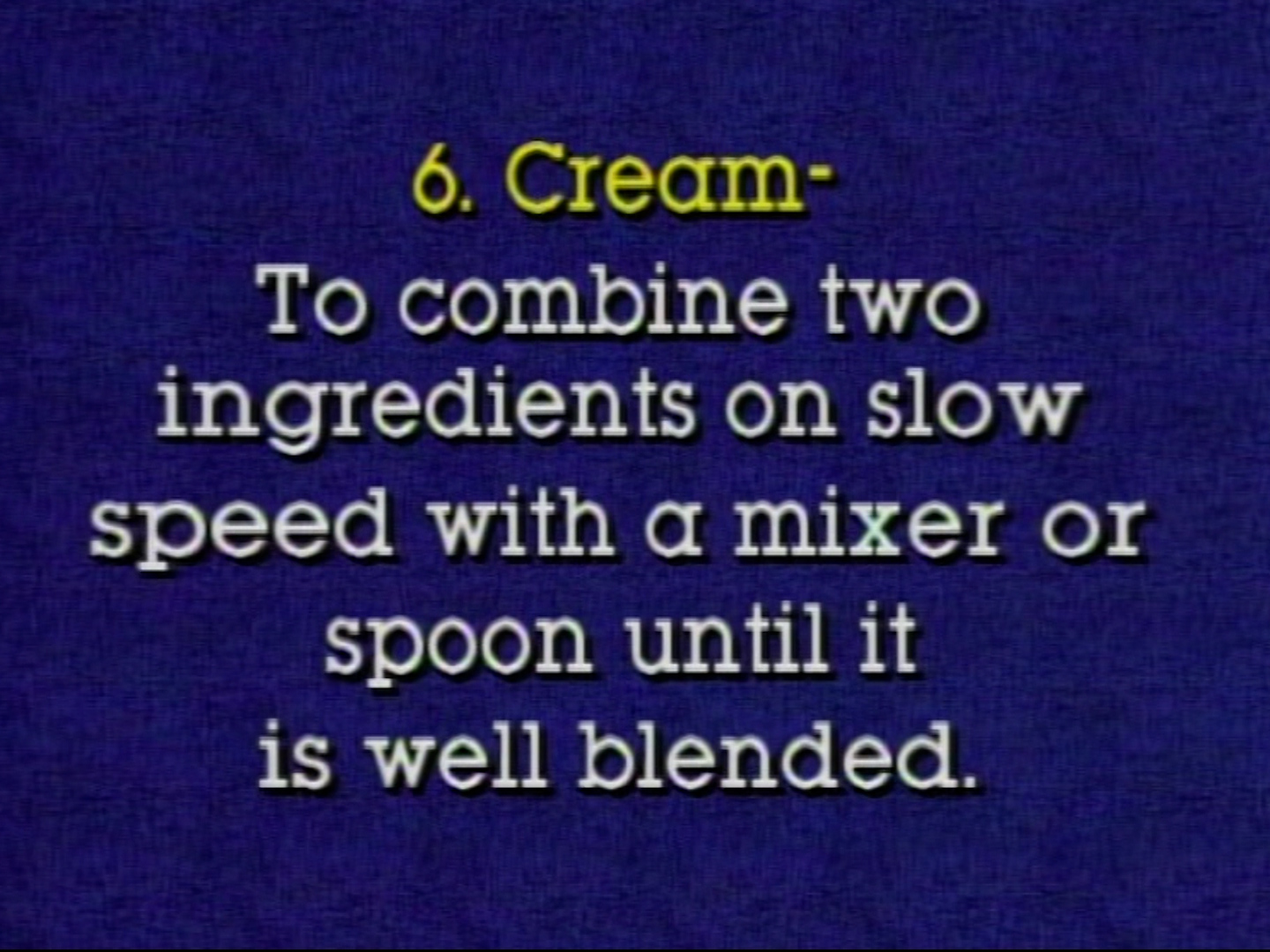
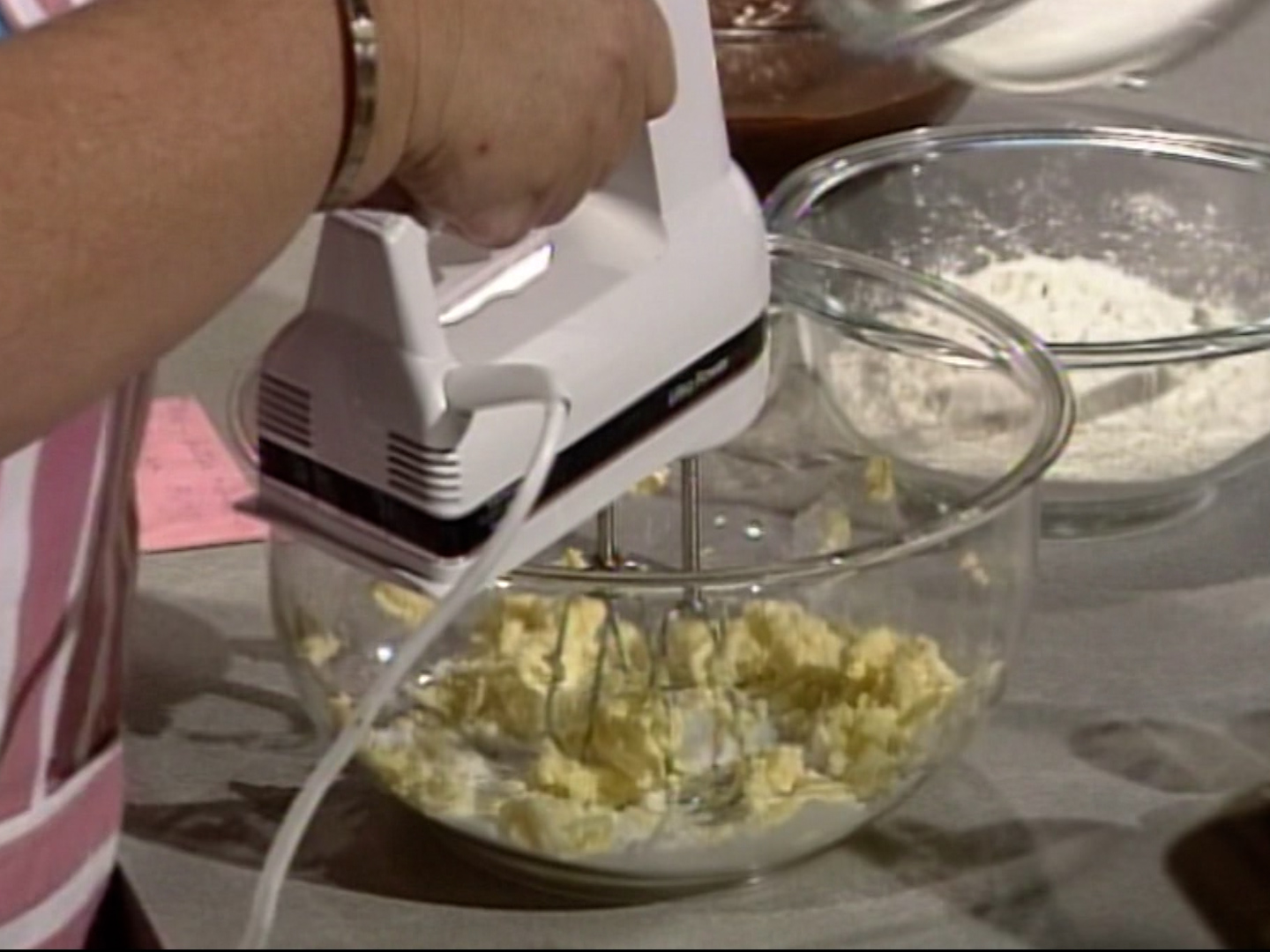
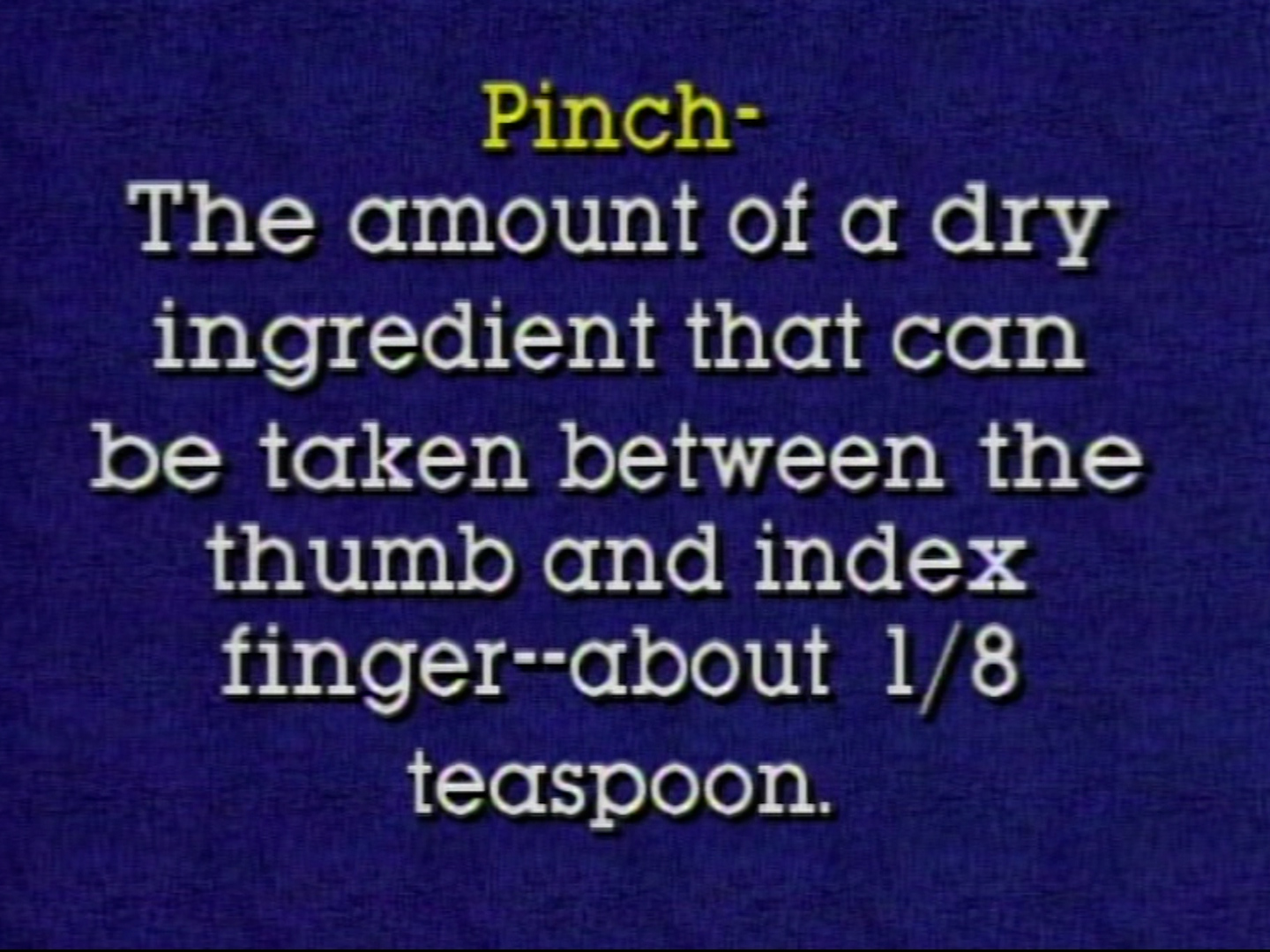
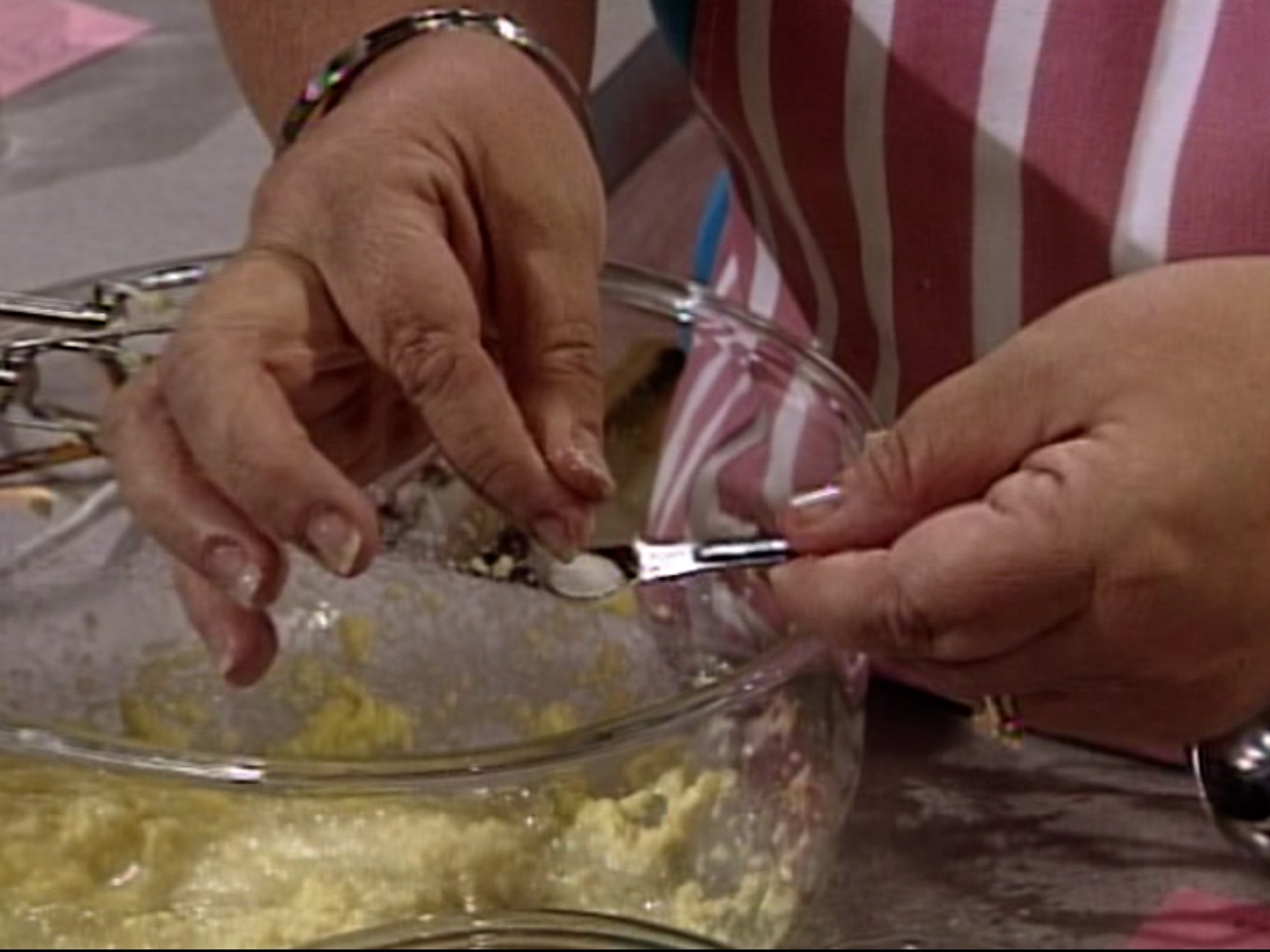
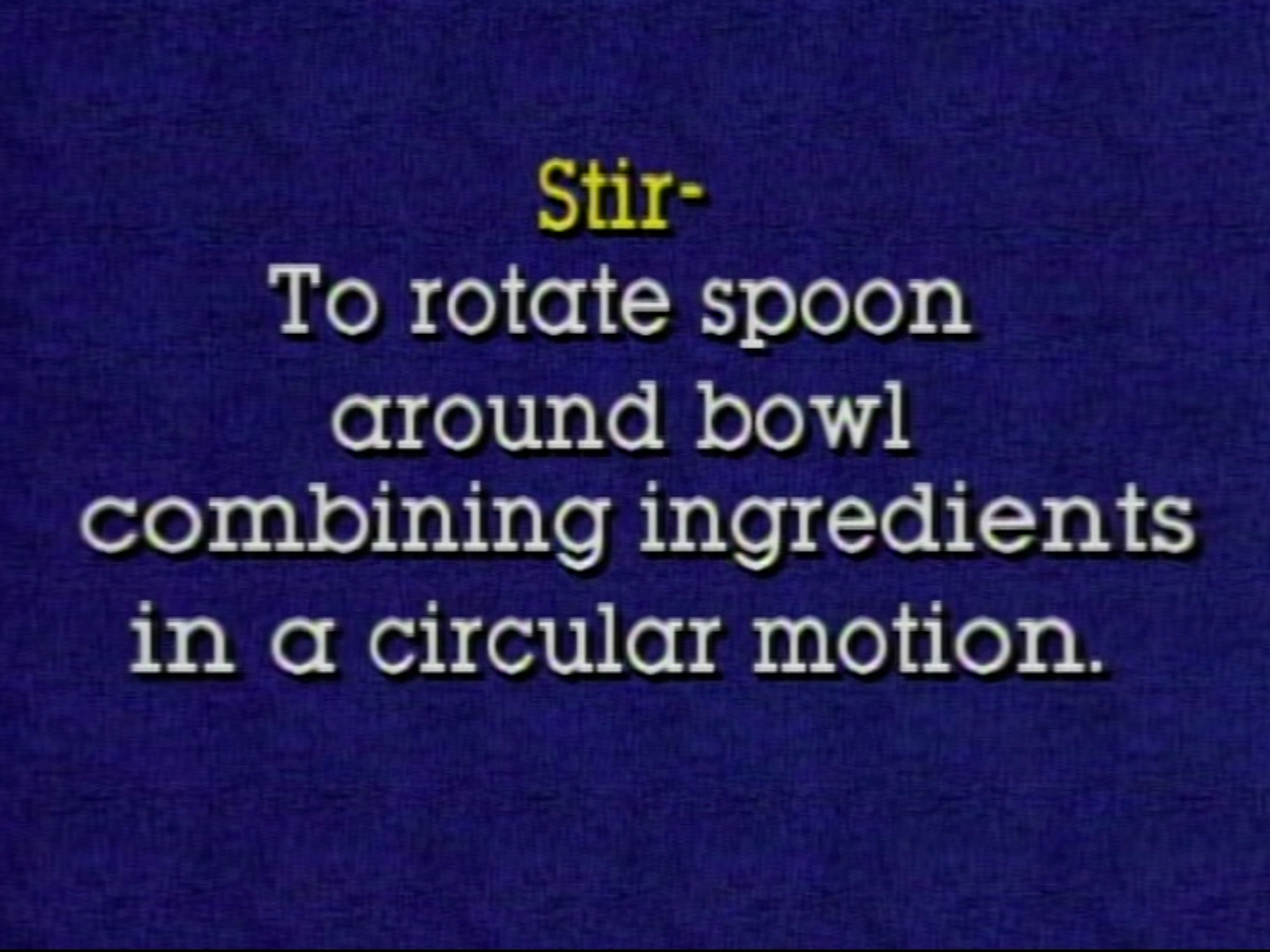
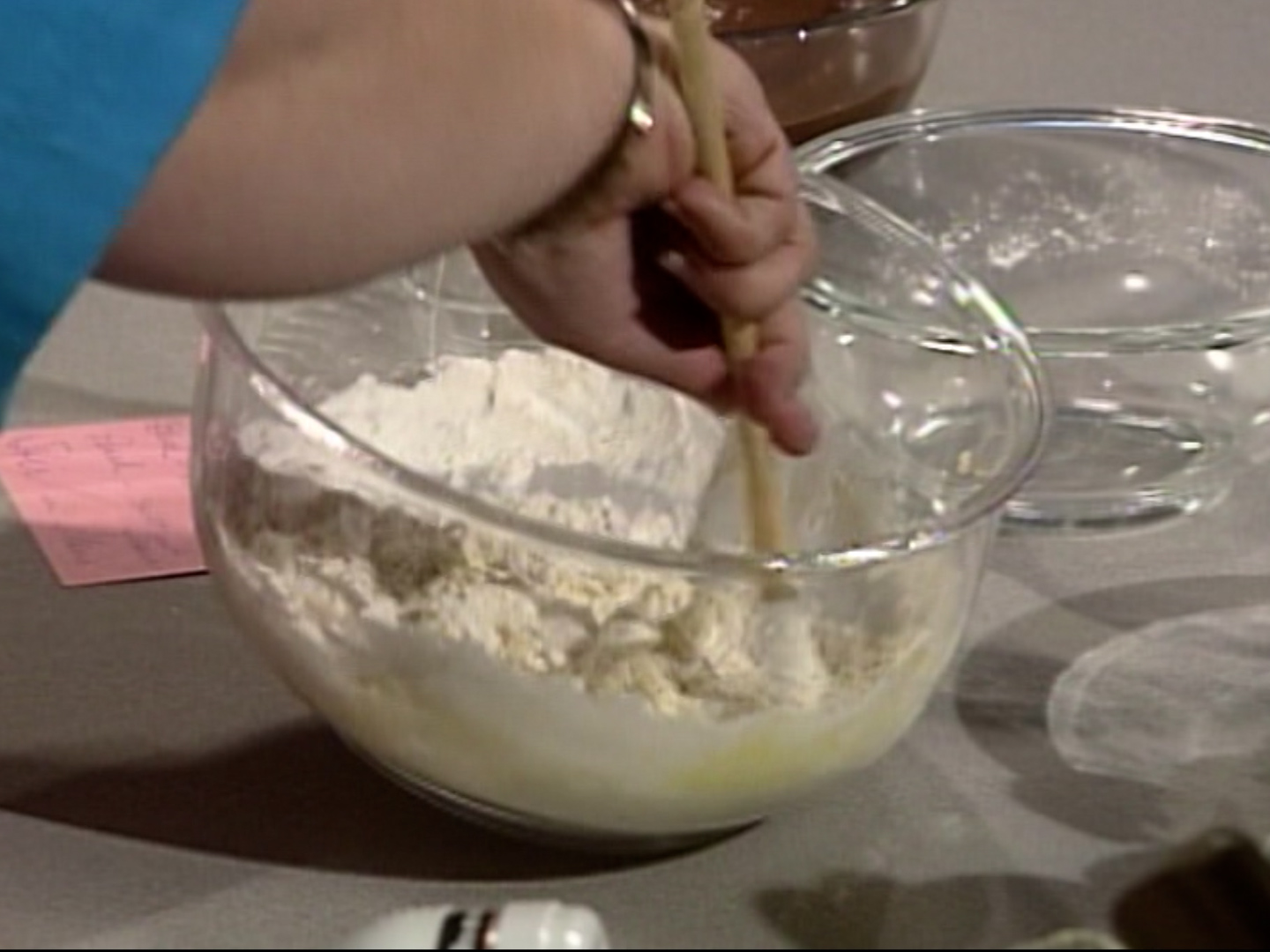
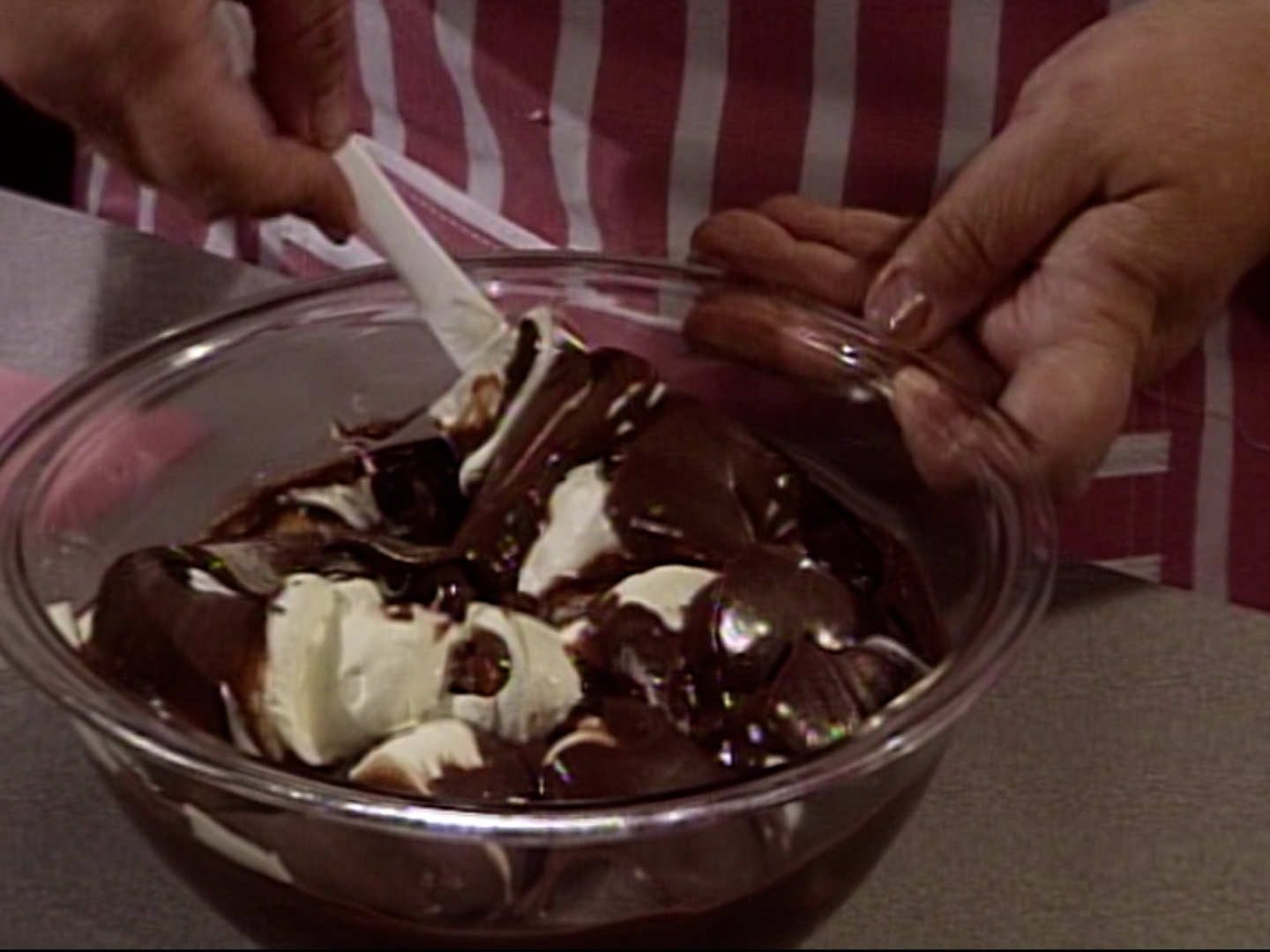
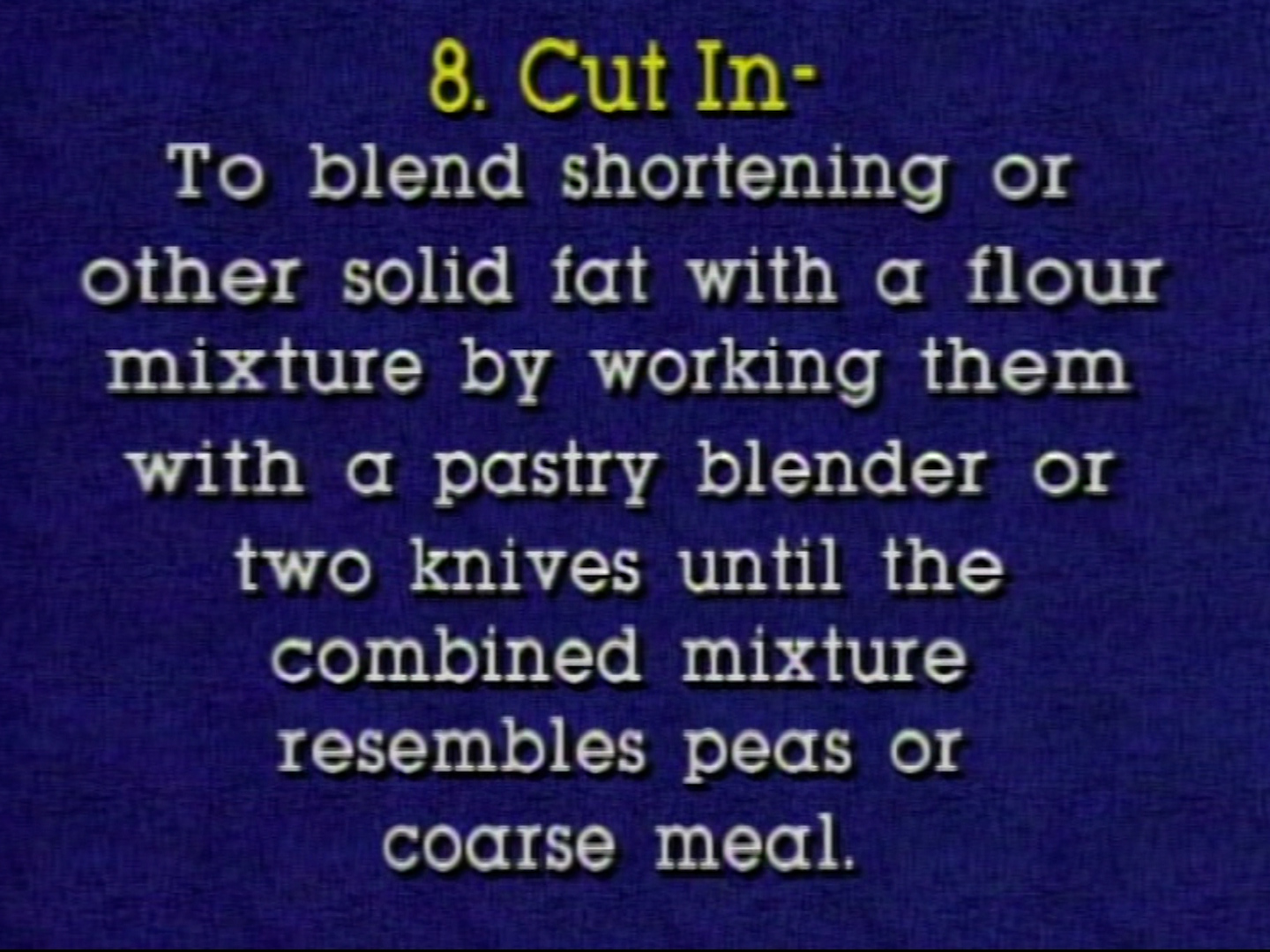
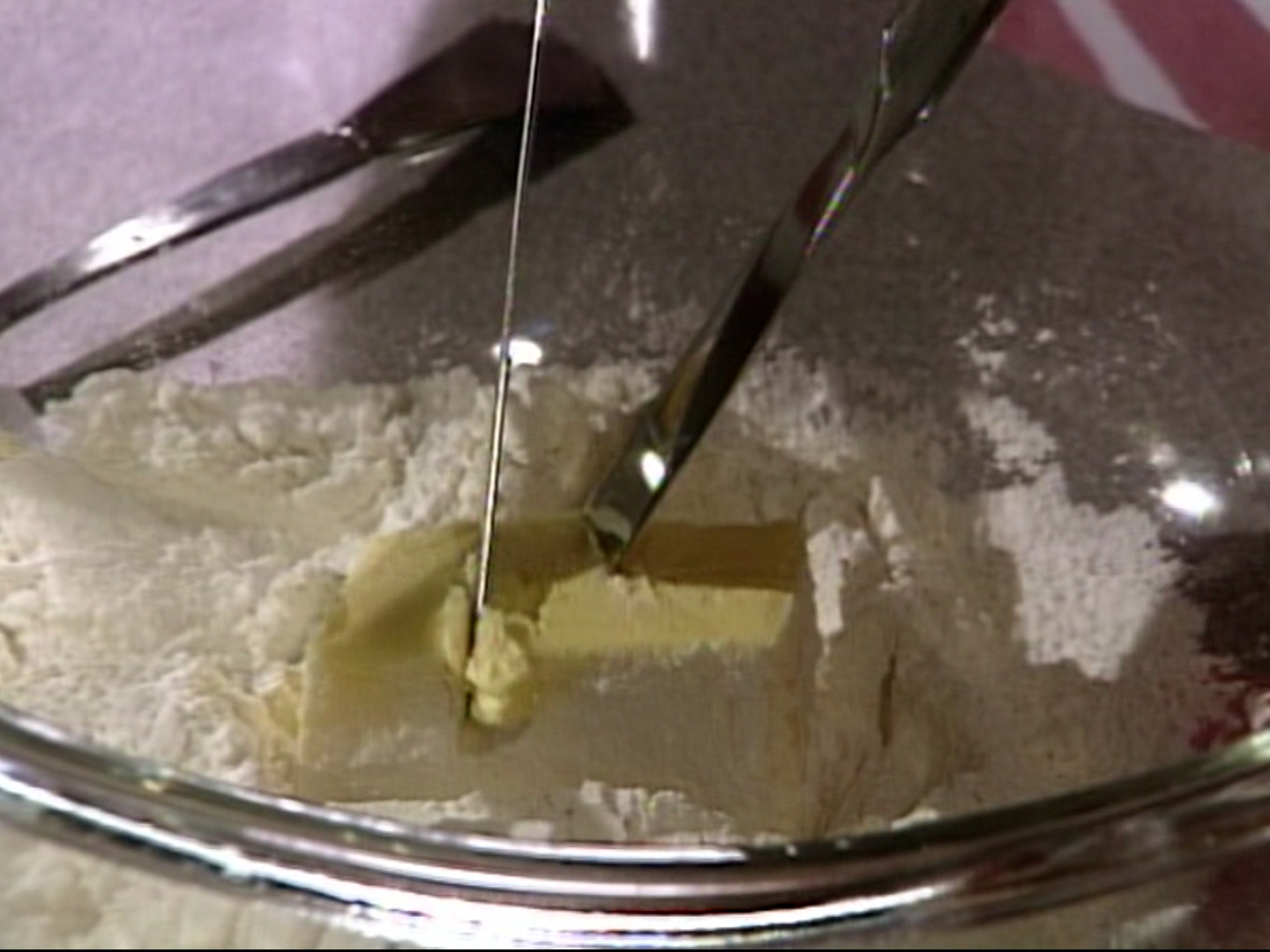
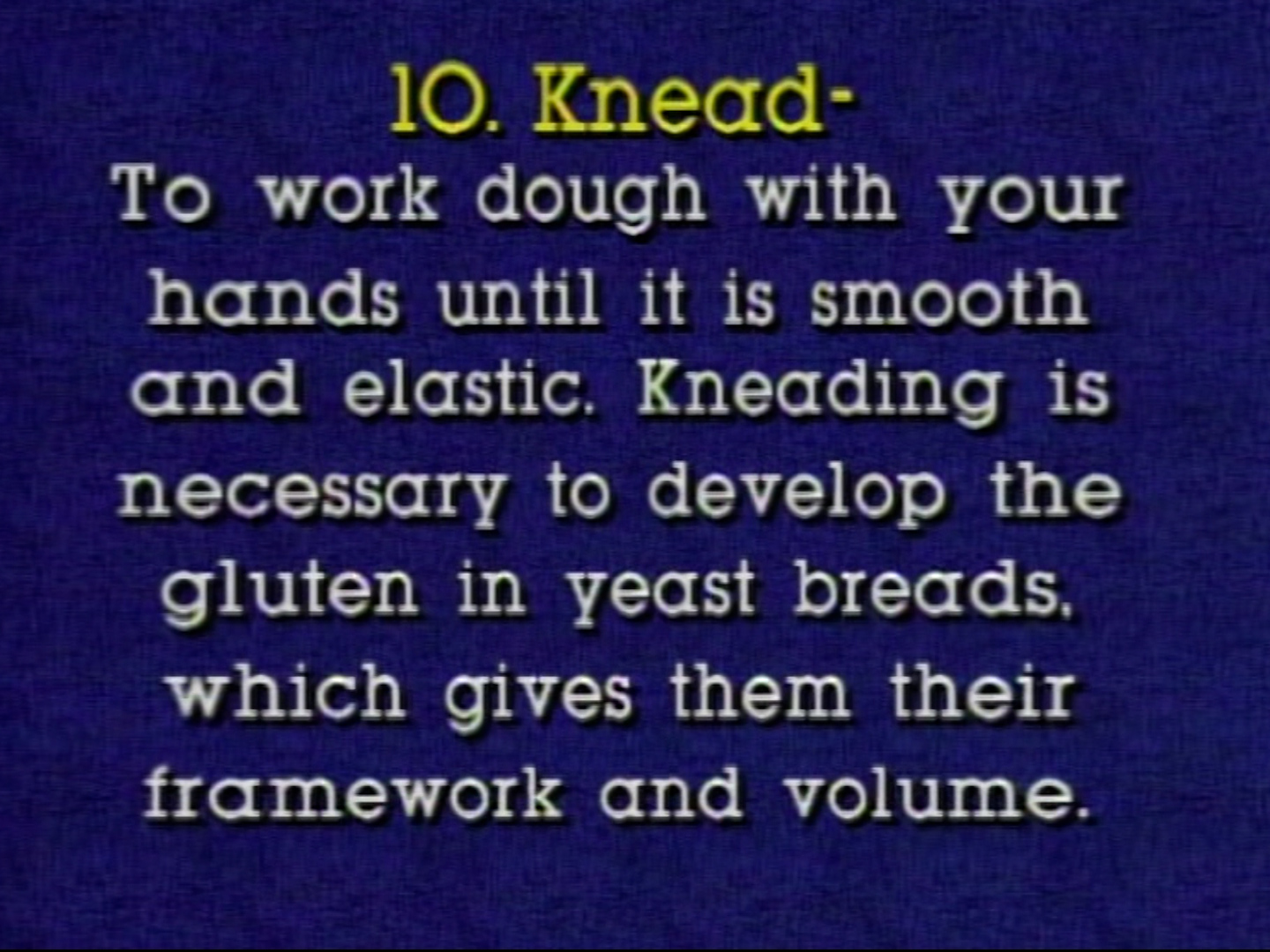
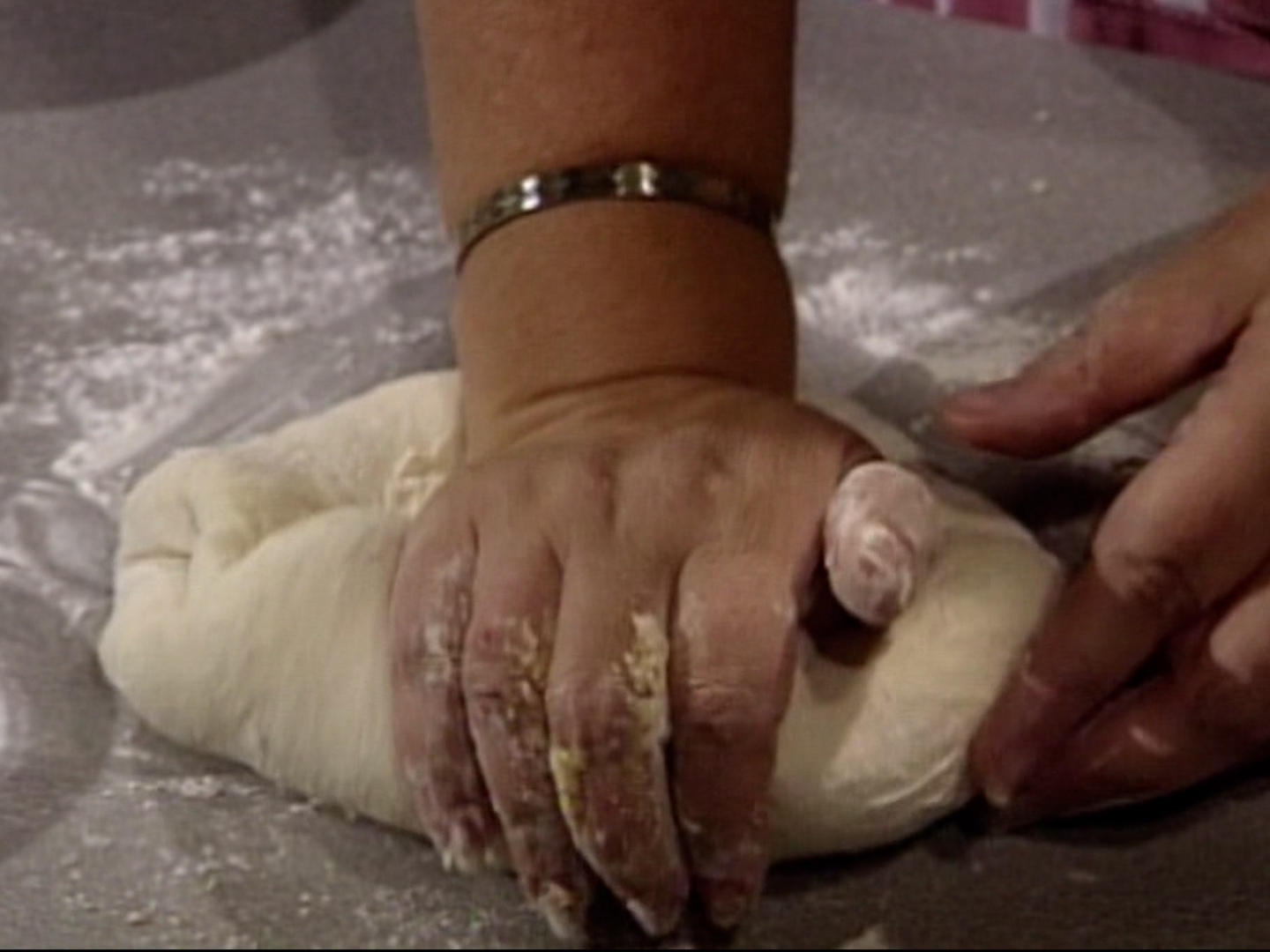
Episode AH2331A: Hello, welcome to “At Home.” So nice to have you with us. If it’s first time you’ve been watching, then, we welcome you. For our steady viewers, we’re glad that you’re with us again. I’ve just been reading through a cookbook and I thought it was very fascinating because they had some, some definitions here. Like how do you chiffonade. No, doesn’t anything to do with a chiffon cake or chiffon. It’s a way you cut some greens. And then there’s deglazing a pan. Parchment paper. I thought that’s what they wrote legal documents on. Then there’s proofing yeast. I know what that is. Toasting nuts and trussing. Trussing, interesting. Well, I though that just today we would do something about the cooking terms that we use most often when we’re making recipes. And we realize from the mail that we’ve been receiving that a lot of you are not familiar when I would say, “Do this, or do that, “or fold this in, or fold…” And so we thought we would do a program explaining the different things that a recipe calls for. The different terms. My mother-in-law, who is an excellent cook, went to church one time and a lady, friend of hers, was telling her how she makes a particular dish. And she said, “Oh, you know, I do this.” And my mother-in-law said, “Oh, I make it too.” She said, “Well, I saute my onions “and my celery and my peppers in butter.” My mother-in-law said, “Oh, I don’t. “I fry mine.” Well, it means the same thing and she didn’t know that. They had a good laugh. She’s good nature so she took it in stride. But it is embarrassing if you don’t know what the particular term means. So today, we’re coming to terms with cooking terms. And we’re gonna get started with the ten most used, widely used cooking terms in recipes and explain what we mean by each one of them. And we’re gonna get started in just a moment. We’ll be right back. Here’s today’s At Home Hint. Avoid the urge to cut or slice freshly baked pies or cakes until they are completely cooled. If you’ve got a helpful hint that you’d like to share, we want to hear from you. Send your hint to At Home Hints, CTV, Wall, Pennsylvania, 15148-1499. CTV, Wall, Pennsylvania, 15148-1499. Welcome back. Okay today, the first cooking term that we’re going to talk about is saute. S-A-U-T-E. And the definition of saute is, “To cook food quickly in a small “amount of hot fat in a skillet.” Now, if you’ll look over here with me, I have a skillet with a little bit of butter. The butter is melted, okay. Now, that has got to be the state of the butter before you begin to saute. When you add whatever it is you’re sauteing. Whether it be celery, peppers, onions, whatever. When you add it, see how it starts to bubble there. That fat, whether it’s butter, grease, oil, whatever, has got to bubbling like that so that when you put your second ingredient in, it immediately begins to cook it. You’re not standing here waiting for it to happen. Saute is not frying because… This is a little bit high. You have to keep your fire down a little bit lower. You don’t want this to brown. Frying is browning. Sauteing is making the foods, like an onion would be transparent. You would know that that is sauteing, okay. This is what we call sauteing. If you keep it on much longer than that, it will be too brown and then it will turn into fry. You don’t want it to fry. It browns. So this is what you call saute, which means to cook food quickly in a small amount of fat in a skillet. That’s saute. Okay, that’s our first term. The second term that we’re going to do is steam, okay. Now, you have to have the right utensils and the right equipment to steam which means, “To cook in a covered saucepan “in a steamer basket or on a trivet “over a small amount of boiling water.” And as we have used on many of our cooking programs, this is an ideal steamer and this cookware is available at the Wholey Balcony Cookware who has supplied our wonderful cooking utensils and equipment here in our kitchen. This is a steamer basket. The water should come up almost to the bottom of the steamer. Inside the pot, it needs to be bubbling. You can see we’ve got this well in advance good and hot for us. And what you do is you place mostly broccoli, mostly vegetables that we steam. Cauliflower, green beans are wonderful when you steam them. Now, all you do… Corn in the cob is great steam too. All you do is lay them. Try not to have them bunched up but kind of level in the bottom and the key to this is, you see this little steam vent here, you want to be sure that the steam does not escape because the steam is what’s going to cook the food. So you close the little vent. And you put that on top. Now, if you’ll notice, the water does not touch the broccoli at all. The water does not touch the broccoli. It’s the steam that cooks it. Normally if you boil, you submerge the vegetable in a liquid or in the water. But when you steam, the vegetable is sitting on the top of the bubbling water, which causes the steam to keep coming up and the steam being this hot as it is, cooks the vegetable. What is so nice about that, you’re not boiling away all the nutritious value of your vegetable by steaming it. You have a bright green color. It stays beautifully green. And all the nutrients, all the vitamins and minerals, everything will stay in your vegetable. Broccoli is best this way. And you say, but how long does it take? Well, depends on how well done you like your vegetables. Now, I like it fork tender. I don’t like it to be mushy or real soft. I like it just to be able, crisp enough to get the fork in there and to pull it out without having to shake it off the fork. So that’s steaming. That’s our second cooking term. Now, let’s go to the third one which is scald. To scald means, “To heat a liquid “just until small bubbles form around the edge of the pan “but not allowing the liquid to come to a full boil.” Now, in this pan, let me move my saute out of the way so you can see. I have a little bit of milk in this pan and we are going at this point to scald this. This milk will scald easy. Many recipes call for scalding the milk and you will notice that when it is scalded, the tiny little bubbles will form around the edge. That’s all you want. You don’t want it to be bubbling and boiling. That is not scalding. That is a full rolling boil. You’ll see this as the steam starts to come up because the milk is heating up and when you see the tiny bubbles, you can’t do this quickly. You wait for this to scald. Don’t say I’ll turn up the fire ’cause you’ll burn the milk on the bottom so you just wait. Patience is a big part of cooking a lot of times although sometimes I get in a rush but you have to wait on some of these things because you change the texture if you do it too quickly. Sometimes when you scald, what we call a scum will form on the top. That’s part of the scalding process and when you use it, you would just remove that. But you can see the steam coming off of this. It’s heating slowly. Now, I can see over in this corner, I don’t know if the camera can get that or not. Do you see that? It is just bubbling a little bit. Can you see back here? These tiny little bubbles. That’s what we’re calling… Over here in this corner, there we go. That’s called a scald. Now, when you get to that point, you wanna remove it from the heat because if you don’t, it’s going to continue to go on and pretty soon, you’re gonna have something more than scald. You’re gonna end up with a simmer. Let’s see what the definition of simmer is. Simmer is, “To cook in a liquid just below boiling.” Now, here we are with our milk and I tell you, you have to learn your stove, your range to be able to do all of these effectively. You see the little bubbles in the bottom of that pan, okay, it should not bubble. When it bubbles, you know it’s simmering. If it bubbles too much, big rolling bubble, it’s too far. Simmer is just underneath the whole pan. See these bubbles? That’s what it should do. Simmer. That’s what it means. Simmer, let’s check the definition one more time. Simmer means, “To cook in a liquid just below boiling.” That’s where we have with our milk. All right. So, are you taking notes on these? Very important to do that because this will help us in further programs when we’re making things. Also, remember when we said, “Let’s scald the milk.” Good. All right, the next word is marinate. Now, this is a good way to take less expensive meats, cuts of meats, and make them tender because to marinate means, “To let food, principally meats, steep in an oil “or acid based sauce prior to cooking. “The marinade adds flavor and tenderizes the meat.” Okay. Marinate. Now, a lot of times people will marinate chicken to put it out on the grill. Or sometimes, you’ll marinate slices of beef for a stir fry, or chicken for a stir fry, or pork for a stir fry. Sometimes, people will marinate vegetables just with some garlic and oil, something like that. And a few herbs or spices. And it just enhances the flavor. Really, really enhances the flavor. So what we’ve done today, I’ve just taken a few chicken legs and you can use any kind of a marinade. Now, homemade marinades are wonderful because sometimes you soy sauce, that hunsen or hun… Hunsen sauce, something like that. Can’t remember the name of it. But it’s in a specialty store. I use but I can’t remember the name of it. When I see the bottle, I know what it is. But it makes a wonderful marinade. But also, just a zesty Italian dressing is a perfect marinade. Now, I should say, that we need to shake this up because you know, in Italian dressings many times, the spices stay at the bottom because they don’t mix well and stay mixed. But all you would do, you’ve washed your chicken well, and you’ve patted it dry because any water that you leave in there will water down the marinade and you will lose the real full potency of it and you just pour it. You make sure that all of it’s covered. Okay. Now what I like to do, after you have left this sit for about a half hour, you want to turn it because if you don’t, one side will be full of the flavor and the other side won’t. So after a half hour, all you do is you keep turning. Turn the chicken and baste with this marinade to be sure that it is covered completely because if it doesn’t, you’re gonna have pieces that taste real good and other piece are gonna taste kinda bland. All right. But the best thing for a marinade is that you have, absolutely have to use, leave it in the marinade for at least an hour. If you don’t, you’re almost wasting the marinade because it doesn’t have time for that to fully develop and when the best place is… According to your recipe, sometimes your recipe will say, “Marinate in refrigerator.” Sometimes it just says, “Let it sit out “at room temperature to marinate.” But whatever it is, follow the directions on your recipe because that’s really, really important. And once this is done, what you would do is bring the chicken out and if you’re going to fry it, you would put it in your skillet. If you’re going to put it on the grill, you lay it on the grill and you let it just go ahead and grill. But you can baste If you notice while it’s cooking, it continue to dry. This marinade, you can you use. Now, you have to be very careful because of the salmonella and they say you should not do it. Most of the time, if this is set for any length time, this raw chicken in it, I would not use it. I would go back and use some that’s left over. But it depends on the type of sauce that you’re using. Sometimes they’ll tell you to go ahead and use the leftover marinade. Okay, so that is marinade. Again, marinade means to let food, principally meats, steep in an oil or an acid based sauce prior to cooking. That’s called marinate. Okay. Moving right along. Let’s talk about cream. Now, most times when you’re doing your baking. They’ll say, “Cream this together, “then blend this in, “then mix this is, “then stir this is, then…” And you are so confused. What does mix, what does blend, what does stir, what does… So we’re gonna show you as close as we can exactly what we mean. Number one, we’re gonna mix butter. I have just a stick of oleo or butter here. I’m gonna add some sugar to that. Anytime they tell you to cream, okay. This definition of cream means, “To combine two ingredients on a slow speed “with a mixer or a spoon until it is well blended.” Now, when you have to do something like that, you need to make sure that your butter is at room temperature. If you’re going to start to bake your cookies or make your cake at 3:00, about one or 2:00, get the butter or whatever you’re using out of the refrigerator because it has to be room temperature. If it isn’t, you will have all kind of trouble. Okay, this is nice because this is at room temperature. This is creaming. Okay. Probably add a little more sugar in here. I’m not making anything in here, folks, I’m just demonstrating to you what this means. Okay. To cream means to incorporate these two ingredients together until they’re smooth and creamy. Just what it says, cream. Okay. You will keep mixing until it is creamy. Okay. Now, what you see here is that it looks like the butter has totally taken up all the sugar. That’s creamy, okay. That’s what it means to cream. Okay. Now, the next word is blend. Means to blend. And that means, “To mix thoroughly “two or more ingredients together.” So, we have creamed the butter and the sugar. Now we will blend in the two eggs. And again, we break them into a bowl. And why do we do that? Because we want to be sure they are good fresh eggs. Drop that in there. Okay. Get back here, you. Okay, nice fresh eggs. Okay. There you go, we’ve got two little, little yolk there we don’t want. Okay. Now, this is where we blend the eggs. What are you laughin’ at over there, Larry? Because we’ve got egg shells in there, right? We’re blending now the eggs into the cream mixture. See how it changes the consistency. This is blending. Now, there’s three ingredients so we blended two or more. It’s what the definition says. We have now blended our mixture. That’s called blending. Now, if I had more time, I’d make that a little more smoother because that needs to be, in most case in cooking, that needs to be very, very smooth. That’s your basis for your batter or your dough. That’s blending. Now, the next part that we’re going to add is some salt. If if said to you, “Put a pinch of salt “in that recipe.” Would you know how much salt I meant? Does it matter because some people’s fingers are bigger than other people’s fingers. Well, I looked it up. And it said, “A pinch of salt “is the amount of a dry ingredient “that can be taken between the thumb and index finger. “About an eighth of a teaspoon.” So I figure why not? Let’s just see. Let me get my measuring spoons because I think it’s good to know how precise we should be because does it mean that some people’s fingers are bigger than others or… I mean, let’s be scientific. Here’s my pinch of salt. And this is 1/8 of a teaspoon. Let’s measure it and just see. Pretty close. Not too bad. What’s sticking on my finger would probably fill that up pretty good. I would say an eighth of a teaspoon is a pinch of salt. Okay. Very good. See, we’re scientific in this kitchen. Yeah. All right. Next, after we… We know what cream is. We know what blend is. We know what a pinch is. Now we’re going to stir. I have flour. I’ve added my little bit of salt to that. Now we’re stirring. To stir, here’s the definition for it. “To rotate the spoon around the bowl “combining the ingredients in a circular motion. “To rotate the spoon around the bowl “combining ingredients in a circular motion.” All right. Most the time, when you get to this point, your batter or your dough will be too thick so you cannot use your beaters and your mixer because that’s just for creaming and blending. What you do is you start to stir. And you keep stirring around in a circular motion because what that does, that brings everything together. And you will have your dough. This is stirring. This is stirring. Around the bowl. Around, around, around. Pretty soon you’ll find everything will come together. And when it has, you know you have stirred well and that’s what the recipe calls stirring. Okay. Let’s move on. The next one is something that everybody wants… It says, “Well, I don’t know what that means to fold. “What you mean when you say fold?” Well, let’s have a definition. To fold means, “To combine delicate ingredients “such as whipped cream or egg whites “with other foods by using a gentle “circular motion to cut down into the mixture, “slide across the bottom of the bowl “to bring some of the mixture up and over the surface.” Now you say, “Oh, Arlene. “That’s sounds so complicated. “There’s no way. “I don’t even understand what you’re talking about.” Well the best way to tell you is to show you. Okay, we have some plain chocolate pudding here. Now many times when you make a souffle, they will separate the eggs. The yellows will go in with the heart of the souffle. Then they tell you to take the egg whites and whip those and then you fold them in. And if you do it wrong, the souffle will never puff up like it’s suppose to. Many times, if you’re making something kind of a pie that has a custard texture to it, they do that so that the filling is not so heavy. To incorporate egg whites that have been stiffly beaten or whipped lightens the texture. When my mother would make her pumpkin pie, she didn’t like that heavy pumpkin so she would beat the egg whites and fold it in. It would be like a pumpkin chiffon. Something lighter. Not such heavy texture to it. Well, just for demonstration sake, I’m gonna take some whipped cream and you put it into a heavy mixture which this is. This is the technique for fold. It goes down and up. Down and up. Down and up. Down and up. And you keep turning the bowl and rotating it. Rotating it. Now, you don’t want to do this and you don’t want to beat it around because see, you’re just incorporating it and with this motion, you will do… Exactly, you should see some of these strings. You shouldn’t say, “Oh I didn’t get it mixed up enough. “I can still see some of the white.” You’re supposed to see some of the white. This is folding it in. Down, scrape the bottom of the bowl, come up. Down, scrape the bottom of the bowl, come up. Down, scrape the bottom of the bowl, and see, that’s all that is. That’s called folding in. That makes it lighter and fluffier than its normal texture. It lightens it. It makes it not so dense or so heavy. That called folding. Another thing for folding besides clothes. Right, ladies? Okay. Now, let’s go on. Time’s running away from us here. The next one is to cut in which is flour. Let’s see what the definition of it is. Means, “To blend shortening or other “solid fat with a flour mixture “by working them with a pastry blender “or two knives until the combined “mixture resembles peas or coarse meal.” Now understand, these are technical terms here. But the best way is to show you what we’re talking about. This process is used a lot when you’re making pie crust, when you’re making biscuits. Now, they tell you to use two knives. Number one, your butter or your shortening or whatever has got to be ice cold. It’s got to be refrigerated because if you don’t, what will happen to this is what happened to the cream where it’ll just blend right in. You don’t want that to happen. You want these little bits of butter to stay whole in the flour because when you bake it, that’s what makes it crisp and flakey. Now they say to do this but I’ll tell you, I have a hard time doing that. I mean, it takes a lot of time. I’m sure people do that. And I don’t have a pastry blender because I absolutely never use those. I have used a fork which you can. And all you do is you get a chunk of the butter or the fat that you’re using on there. And you go like this, you know, and you keep workin’ it. But what I have found the easiest and the best of all is with your fingers. You just work it. And I like to do that because you get the feel of what that’s supposed to feel like. You rub the flour over the butter. That, in itself, is called cutting in. So you cut it in. You’re cutting the flour into the butter or the butter into the flour. And this is so important because what we do with this… In small as these morsels are, the smaller the better. Okay. And what you would do with this then is you would add your moisture to it and you can roll out biscuits. You can make pie crust with this. A little bit of salt with this, you’re ready to go. That’s called cutting in. Okay. Let me go to… I wanna show you what kneading is about because we need to show you this. And it’s really important and I know time is hasting on. Let’s see what it says. What’s the definition for kneading. To knead means, “To work the dough “with your hands until it’s elastic and smooth. “Kneading is necessary to develop “the gluten in yeast breads, “which gives them their framework and volume.” Now obviously, I have been working this dough. And I just want to show you what it looks like when you knead it because there’s a technique. Flour lightly. You always bring your dough back and use the heel or your hand. What that does is pushes the air bubbles out, okay? And I want to finish this and I’ll be back in just a moment. But first, we have to stop for this break. Stick with us now. We’ll be right back.
[Announcer] If you would like a free copy of the instructions from today’s program or if you have any questions or comments, we’d like to hear from you. Send a self addressed stamped envelope to At Home, CTV, Wall, Pennsylvania, 15148-1499. That’s At Home, CTV, Wall, Pennsylvania, 15148-1499.I hope you’ve learned some things today as we have gone through some cooking terms. And remember, they will all be listed with the definitions and we would be happy to send you a copy if you send your self addressed stamped envelope. You know, we enjoy sending out our recipes to you when you ask for them. And we enjoy most when you’re here with us. So be sure to join us the next time because it just wouldn’t be the same without you right here “At Home.” So long.
[Announcer] Thank you for joining us for today’s program. Be sure to join us next time right here “At Home.” Fresh produce provided by Jordan Banana. Wholesalers are fresh fruit and vegetables in Dravosburg, PA. Cookware provided by Wholey’s. Your favorite gourmet deserves the best for less at Wholey Balcony Cookware. Some of our guests stay at the Palace Inn. Your home away from home in Monroeville, Pennsylvania. Cornerstone Television wishes to thank all our faithful viewers whose consistent prayers and financial support have made this program possible.
Add comment